How can I recognise gum recession?
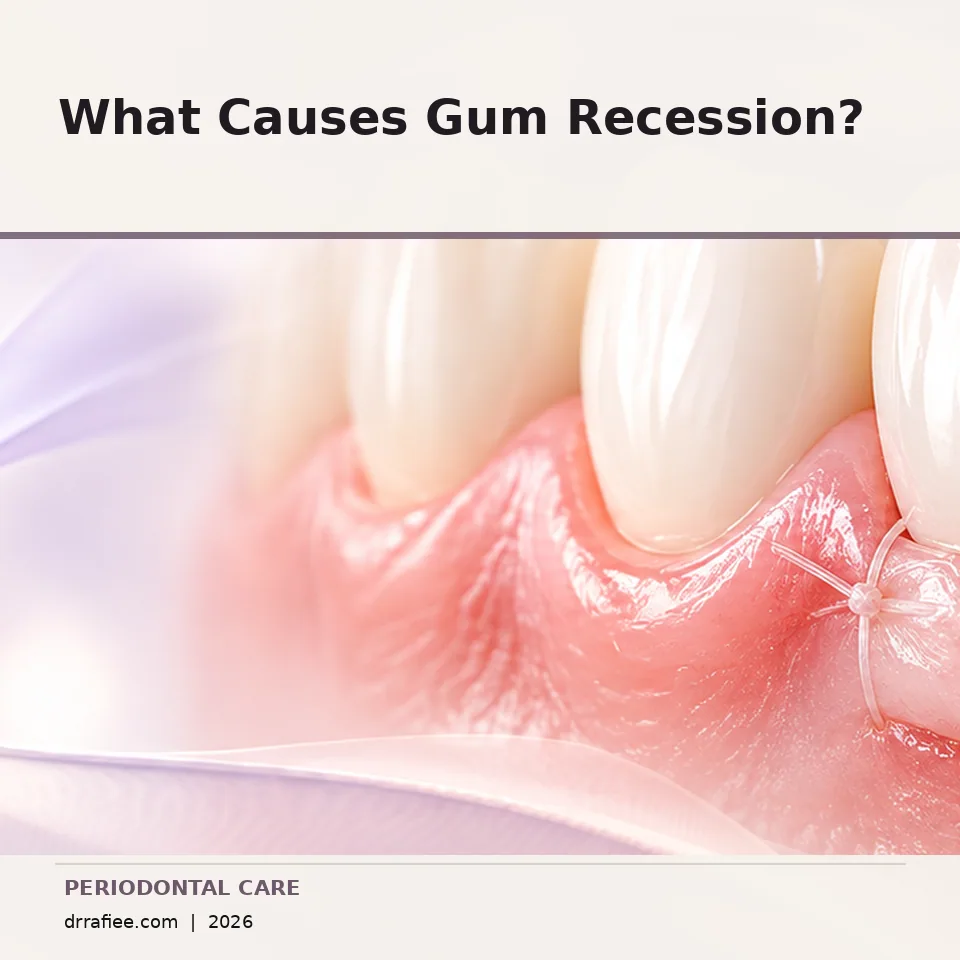
When the gum margin recedes from its usual position towards the root, a more yellowish part of the root may become visible. A tooth may appear longer, or sensitivity to cold water may be the first sign.
Recession can affect one or several teeth and is not always painful. Identifying the cause and determining whether it is progressing are the key considerations.
What causes receding gums?
Excessively forceful brushing or incorrect use of a hard-bristled toothbrush, gingival inflammation and periodontal disease, thin soft tissue, and the position of teeth in the jawbone may contribute. Several factors can coexist.
Some people notice recession after orthodontic treatment, but it should not automatically be attributed to orthodontics alone. The tissues' initial condition and oral hygiene practices must also be considered.
Is gum recession dangerous?
An exposed root may become sensitive and more susceptible to root caries. If recession accompanies periodontal disease, the condition of the supporting tissues and bone is particularly important.
Recession does not necessarily result in tooth loss, but delaying assessment when it is progressing is unwise.
Can receded gum tissue grow back?
Tissue that has receded generally does not return spontaneously to its previous height. Nevertheless, not everyone needs a graft. Improving brushing technique, treating inflammation, controlling contributing factors and regular maintenance may be appropriate.
What information should I share during the assessment?
Tell the clinician when the recession started, whether sensitivity has increased recently, and if your brushing method has changed. Orthodontic history, grinding and previous operations may also be relevant.
Examination of the recession, neighbouring gums and, where indicated, bone helps determine whether maintenance alone is sufficient. Older photographs of your teeth can sometimes help document changes over time.
When may gum graft surgery be considered?
A periodontist may recommend grafting when the extent of recession, sensitivity or need to reinforce tissue justifies it. How much root can be covered and the expected outcome vary between patients.
Periodontal health and the condition of adjacent teeth must be assessed before selecting the technique.
Frequently Asked Questions
Can gum recession occur in younger people?
Yes. Age is not the sole determinant; the cause should be investigated.
Does dental scaling cause gum recession?
Proper scaling is not a typical cause of recession. Removing large calculus deposits may make pre-existing recession more noticeable.
This information is for general education. It cannot replace an in-person specialist assessment.