What is gingivitis?
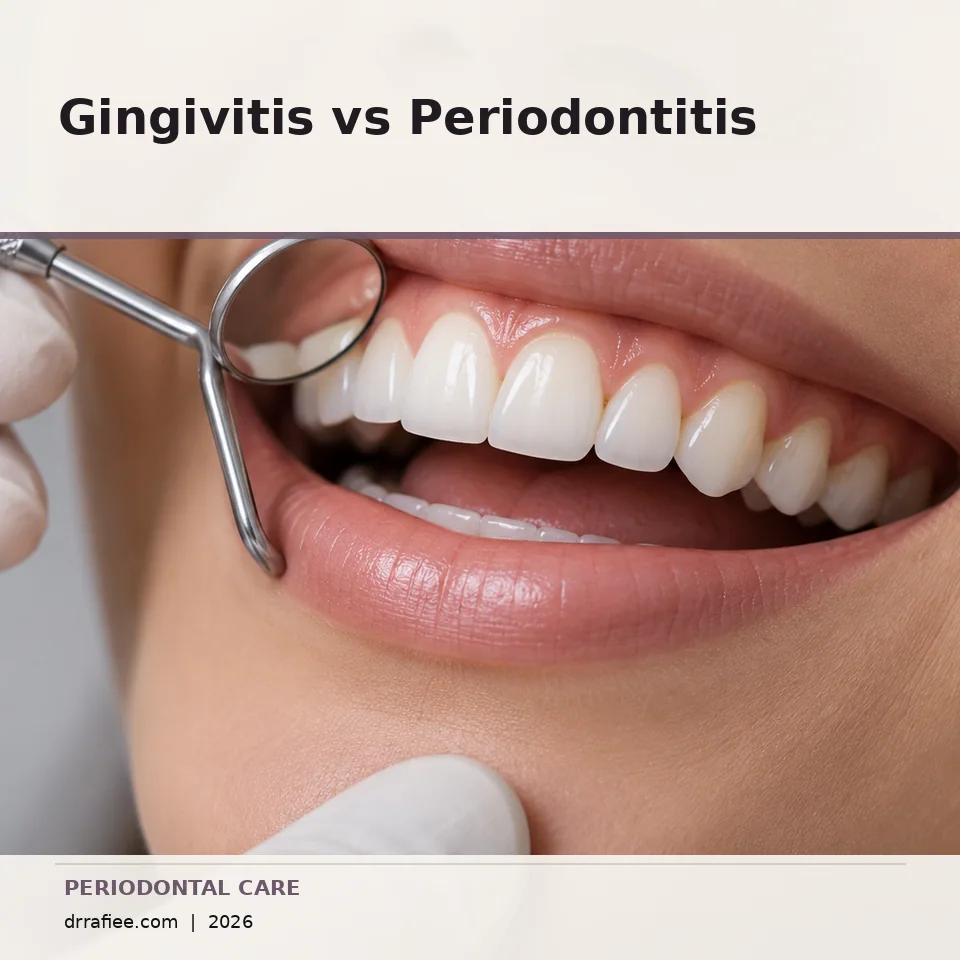
Bleeding during brushing, redness or swelling can indicate gingivitis. In early stages, inflammation may improve when the underlying causes are managed properly.
Absence of pain does not prove healthy gums. Many people notice only mild bleeding for a long time.
How does periodontitis develop?
With periodontitis, inflammation damages the tooth-supporting tissues and surrounding bone. Pockets form around teeth that are difficult to clean with ordinary brushing.
The disease may progress slowly and, at advanced stages, lead to bone loss, recession and tooth mobility.
How is the condition diagnosed?
Gum examination, pocket-depth measurements, assessment of bleeding and tooth mobility, and radiographs where indicated help establish the diagnosis. Severity and contributing factors inform planning.
What treatments are available?
Oral hygiene instruction and removal of deposits are the foundations of treatment. Subgingival cleaning and root surface debridement may be needed. In some cases, after the response to initial treatment is reviewed, flap surgery or regenerative procedures may be considered.
How do underlying factors influence gum disease?
Smoking, poorly controlled diabetes and difficulty maintaining oral hygiene can affect disease risk and response to therapy. Inform your periodontist of medical conditions and medications before treatment.
The aim is not only to reduce bleeding. Assessing supporting bone, preventing disease progression and planning long-term maintenance matter. Coordination with the patient's medical practitioner may sometimes be necessary.
Why is long-term maintenance needed?
Periodontitis may become active again despite appropriate treatment. Periodic examinations and plaque control help maintain results. There is no single maintenance interval for every patient.
Frequently Asked Questions
Is periodontitis contagious?
The transfer of oral bacteria is not the same as simple transmission of the disease. Risk also depends on host factors and oral hygiene.
Does a loose tooth always need extraction?
No. Whether it can be retained depends on examination and the extent of damage.
This information is for general education. It cannot replace an in-person specialist assessment.