What is an impacted wisdom tooth?
When a wisdom tooth does not fully erupt into the mouth or remains in an unfavourable position, it may be impacted or partially impacted. Not all such teeth require surgery.
When is surgery considered?
Recurrent pain or inflammation, unrestorable decay, harm to an adjacent tooth or a specific lesion may be reasons to consider removal.
Why are radiographs important?
Root positions and their relation to nearby structures, including the nerve in the lower jaw, must be assessed before surgery. Additional imaging is sometimes necessary.
The usual surgical steps
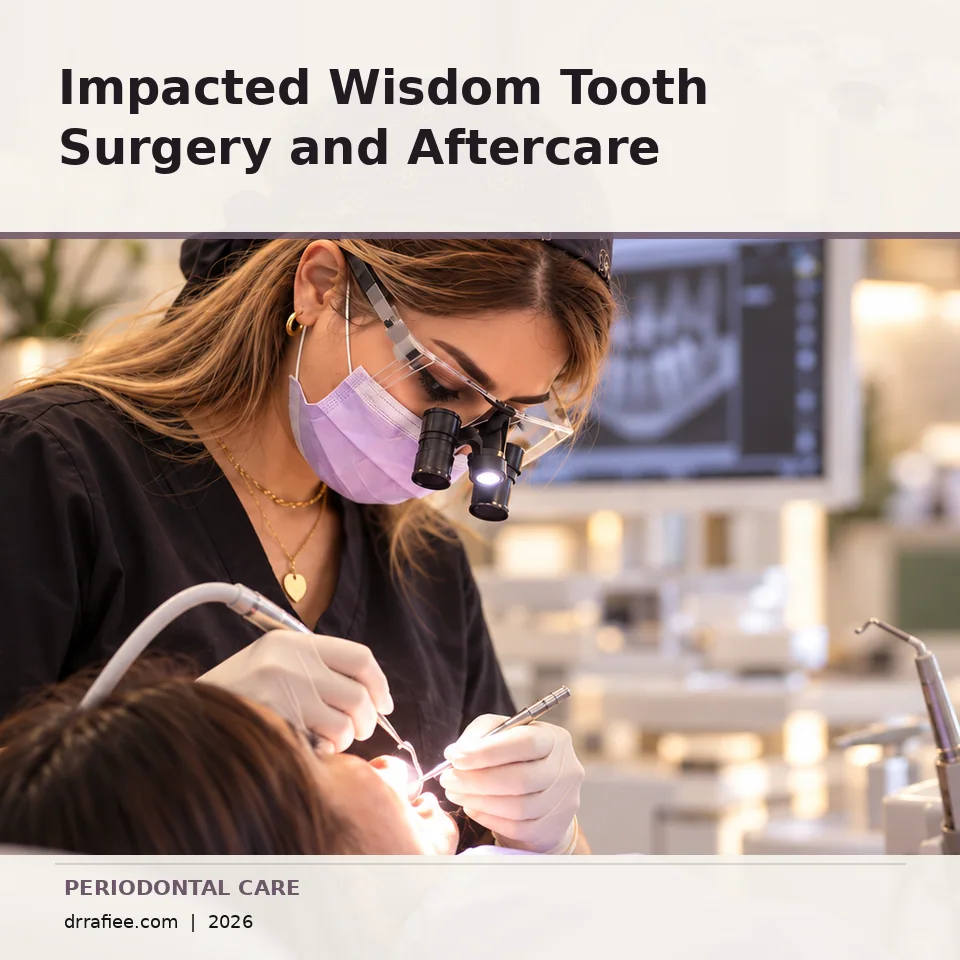
Following local anaesthesia, the gum may be reflected and a limited amount of bone removed. The tooth may be divided into smaller pieces and the site sutured at the end.
Why is every wisdom tooth operation different?
Upper and lower wisdom teeth differ in position, root anatomy and proximity to important structures. The degree of impaction also affects surgical complexity and aftercare.
If the tooth is not causing problems, the clinician may recommend monitoring after assessment. Preventive surgery is not automatically recommended for everyone without weighing risks and benefits.
Aftercare and warning signs
Swelling and difficulty opening the mouth may occur initially. Follow instructions concerning food, hygiene and medication. Contact the clinician if pain becomes more intense or if fever or unusual bleeding develops.
Frequently Asked Questions
Must every wisdom tooth be extracted?
No. The decision is based on symptoms, examination and imaging.
This information is for general education. It cannot replace an in-person specialist assessment.