What is peri-implant inflammation?
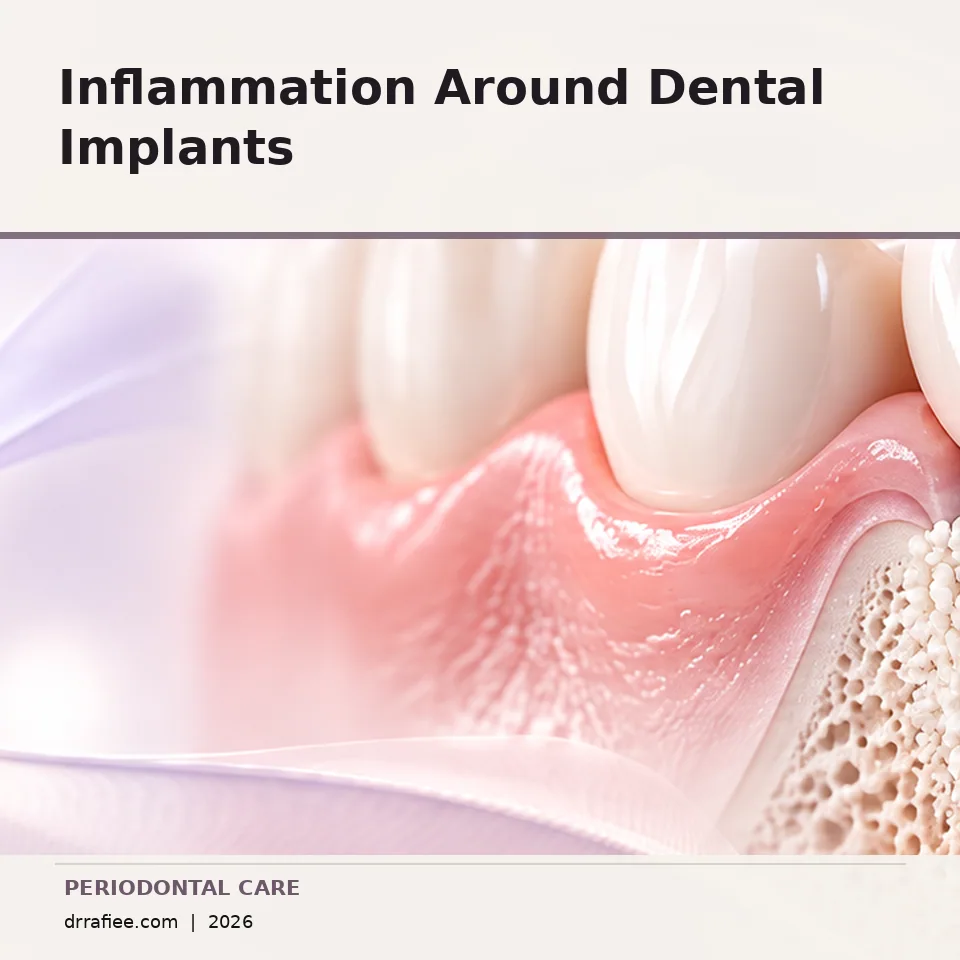
The tissues surrounding an implant can become inflamed. Sometimes inflammation is limited to soft tissue; in more advanced disease the bone supporting the implant may also be affected.
Which symptoms require assessment?
Bleeding during cleaning, swelling, redness, unpleasant odour or discharge should be evaluated. Pain is not always obvious, making regular examinations important.
What increases the risk?
Plaque accumulation, difficulty cleaning around the prosthesis, a history of periodontitis and some general health factors may contribute. Crown contours and accessibility for hygiene should also be assessed.
How is treatment chosen?
The clinician first evaluates tissue condition, severity of inflammation and, where needed, surrounding bone. Treatment may involve improving home care, professional debridement or additional interventions based on the findings.
Why should assessment not be delayed?
Unlike natural teeth, implants do not have dental pulp nerves; problems around them may progress without prominent pain. Repeated bleeding or swelling should not automatically be dismissed as ordinary sensitivity.
Prosthesis design, how easily it can be cleaned and a previous history of periodontitis influence prevention. Patients may need modified cleaning tools or a tailored maintenance plan.
How can problems be prevented?
Regular brushing, appropriate interdental cleaning and periodic reviews matter. Maintenance should be adapted to the prosthesis and periodontal condition.
Frequently Asked Questions
Is bleeding around an implant normal?
Recurrent bleeding requires assessment and should not be assumed to be normal.
This information is for general education. It cannot replace an in-person specialist assessment.